Case Study: Cooling a 300 m² Restaurant Kitchen That Serves 6,000 Guests a Day
Project background
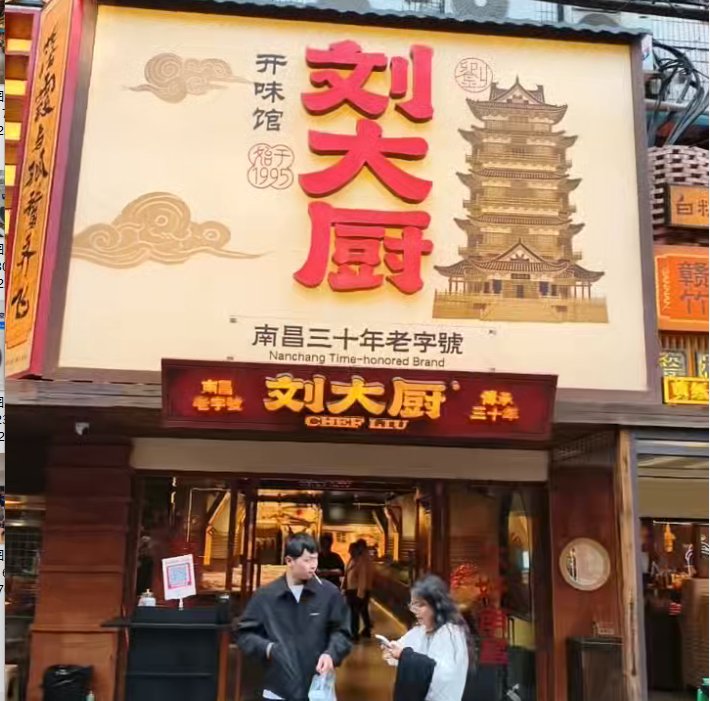
Chef Liu (Liu Da Chu) is a Nanchang restaurant brand that ranks at the top of the city's best-dining lists. Its flagship branch on Hamajie Street runs more than 6,000 covers on a busy day, behind a team of close to 100 staff working at high tempo through the lunch and dinner peaks.
Behind that throughput sits a kitchen of over 300 m². It is an environment the industry knows well: the wok line is the hottest zone in the building, and in summer it became the single biggest drag on both staff wellbeing and ticket times.
Three obstacles in a very large kitchen
- Scale. At 300 m² the room is far beyond what a conventional split unit can cover.
- Distance. Structural constraints forced the cold air through long, narrow duct runs, and static pressure bled away before the air reached the far end of the line.
- Dispersion. Cooking stations are numerous and spread out. Delivering comfort to every one of them, not just the nearest one, was the real design problem.
Solution: calculated layout, pressurised delivery
After a full site survey, the Cooyard engineering team designed a scheme built around point-to-point delivery rather than whole-room cooling:
- 52 directional air outlets across the kitchen, so that every cook on the line works under a dedicated air stream.
- A secondary booster stage on the long runs, to overcome duct resistance and keep terminal air volume strong at the far end of the kitchen.
- Full-length insulation on the supply ducting, so cooling capacity is not lost in transit between the unit and the station.
- Balanced distribution, sized by fluid-dynamics calculation, so that near outlets and far outlets deliver comparable air volume and temperature instead of the usual "cold at the near end, warm at the far end" result.
Results
The system went into service in June 2025 and ran through a full summer season.
- At the wok line, cooks work in a continuous stream of cool air directly at the range, where the load is highest.
- Across the room, spill cooling from the outlets lifted the condition of the central prep area as well, lowering ambient temperature there by a measured 5-8 °C.
- For the whole team, close to 100 people — from head chef to prep hands to dishwashers — moved into a materially better working environment.
In the customer's words
"Last summer the kitchen air conditioning genuinely made the difference. In previous years the cooks complained about the heat constantly and morale suffered; that problem is now solved. Cooyard's engineering was solid, and their approach to the problem was clear from the start. 52 outlets is not a small job, and it showed what proper design can do."
— Mr Liu, founder, Chef Liu
What this project shows
Large kitchens are not solved by adding more cooling capacity. They are solved by deciding where the air has to arrive, calculating the pressure needed to get it there, and then balancing every outlet against every other. That is the difference between a room that is technically cooled and a kitchen where people can actually work.
Planning a kitchen of this size? Send us a floor plan — we size the air volume from the heat load and come back with a scheme and a quotation.

